What will happen to your photos when you die?
An interview with photographer Jeremy Sutton-Hibbert about archives and mortality.

Neil Scott, 10 minute read
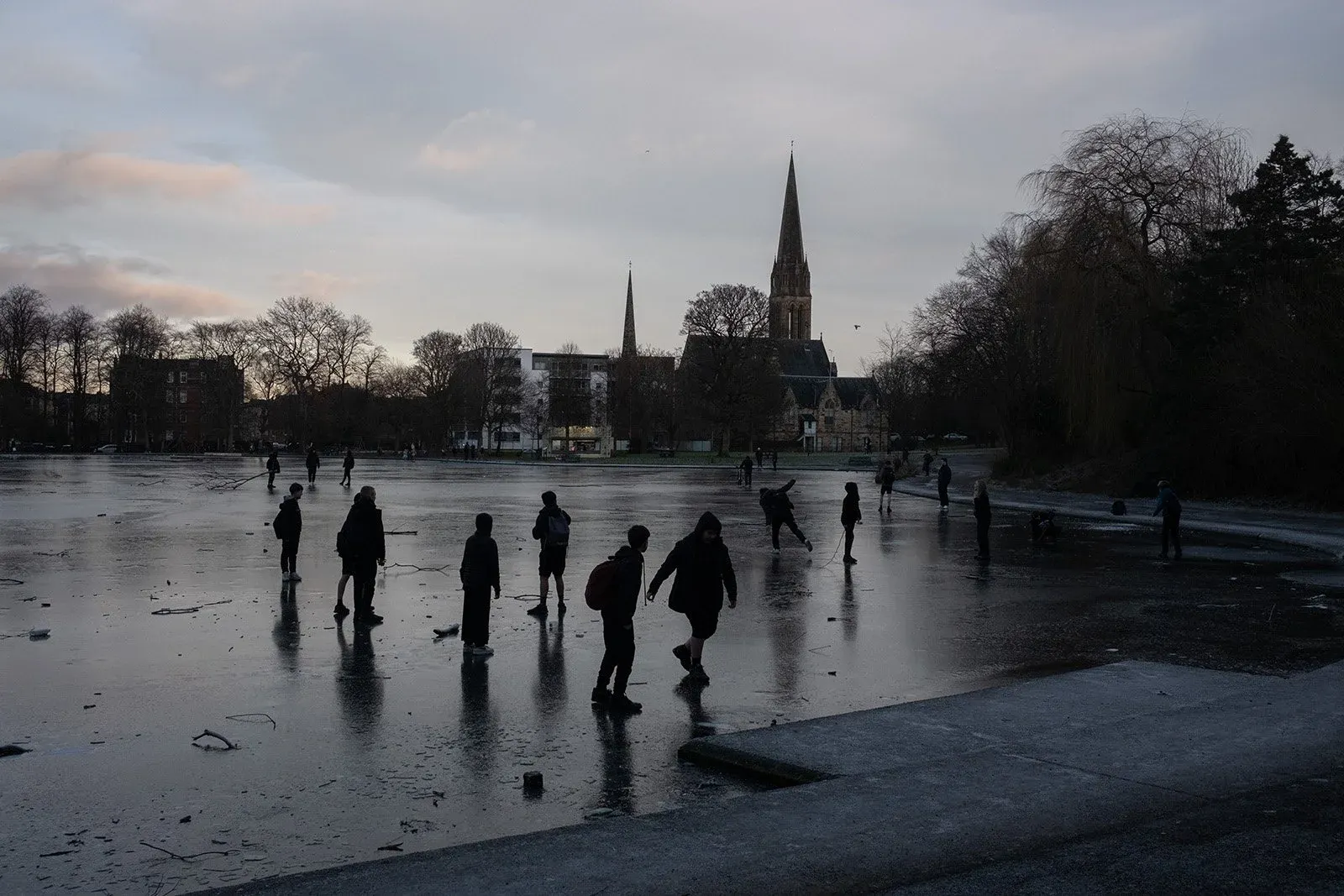
October in Glasgow. The days are getting shorter, the leaves are turning yellow, yet there is still time to get some unfinished work across the line before the year ends.
Back in January I spent a couple of hours walking around Glasgow with the documentary photographer Jeremy Sutton-Hibbert, whose reportage and editorial work have taken him all over the world.
It’s difficult to summarise his career, but he has photographed:
- Politicians including Fidel Castro, Mikhail Gorbachev and Slobodan Milošević.
- Writers including Muriel Spark, Salman Rushdie and Martin Amis.
- Shipbuilders, Orange Order marchers and protesters.
- Roma communities, Scottish artists and Common Riding equestrians.
- Countless other subjects on photojournalism assignments.
In 2022, the University of St Andrews acquired his archive of more than a million images.
For photographers, an archive can be the difference between immortality and oblivion. Everyone knows the story of Vivian Maier, whose negatives turned up at an auction and made her famous after her death. But what about someone like Helmut Newton, whose lavishly funded foundation can protect and promote his legacy for generations.
Rather than sit down face-to-face, I wanted to interview Jeremy at work. I was particularly interested in his ongoing project, Gloaming, which documents the streets of Glasgow in a crepuscular light.
Neil Scott: How did your Gloaming project begin?
Jeremy Sutton-Hibbert: It was two ideas that came together: I wanted to photograph the streets of Glasgow, and I wanted to photograph in the light. I’d got into the habit of only photographing when I was sure of getting a picture. I wasn’t leaving myself open to chance. So I made a deliberate effort to photograph in the gloaming half-light of dawn and dusk, whatever I wanted, whatever I saw, and not think about it. It’s mindfulness photography.
How do you approach editing? Do you delete photos? I hear from a lot of photographers that what is good changes over time.
I sometimes joke that I’ve got a terrible business model, because I go out to photograph thinking, “These will be really interesting in 50 years’ time.” It doesn’t help me pay the bills this month.
I guess you’ve seen that happen with your own work. Your zines about Glasgow’s deindustrialisation still resonate.
I sorted out my archive over lockdown, around 2021. It was a great motivator, and I’d recommend it to many photographers. I spent the best part of nine months looking back over my whole career, going through everything, sorting it and cataloguing it. Not that I needed any validation, but it was quite nice to look over my career and think, “Wow, you worked hard.”
A by-product was that it motivated me to get out and do more. I’ve had a massive international career. I’ve been lucky to see the world, but increasingly I wanted to photograph Glasgow and Scotland. Sorting the archive freed me from looking in the rear-view mirror and let me concentrate on going forward.
I’m 56. So say I’ve got 15 years of active photography left. Say you do a project a year, or a project every two years. I’ve got 10 to 15 projects left. That’s a motivator.
It gives you a goal, gives you focus. You have to be working to a plan or you’re scattered.
Is there a sense of mortality?
I’m not fatalistic. I am a realist. The reason I go to the gym is so I can keep on carrying all these cameras. Keeping healthy and fit is incredibly important if you want longevity in this career. It’s good for your sanity as well.
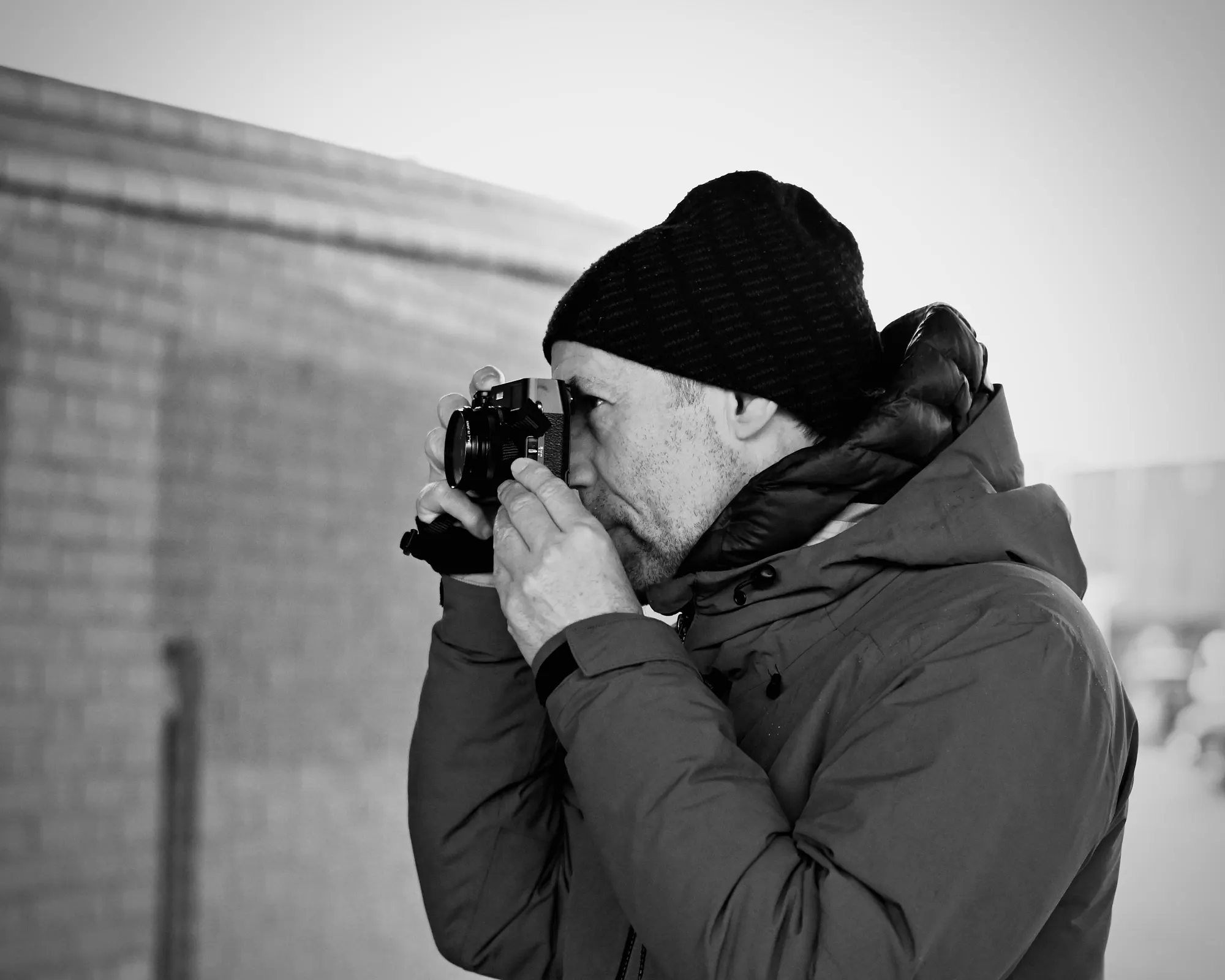
Jeremy raises his camera to photograph some graffiti.
What appeals to you about this graffiti?
I love photographing political graffiti, sectarian graffiti, whatever. It’s the voice of the people. It’s what people are thinking right now. Maybe it’s not interesting as a photograph, but in 20 years, 50 years, 100 years … I think in the very long term about my pictures.
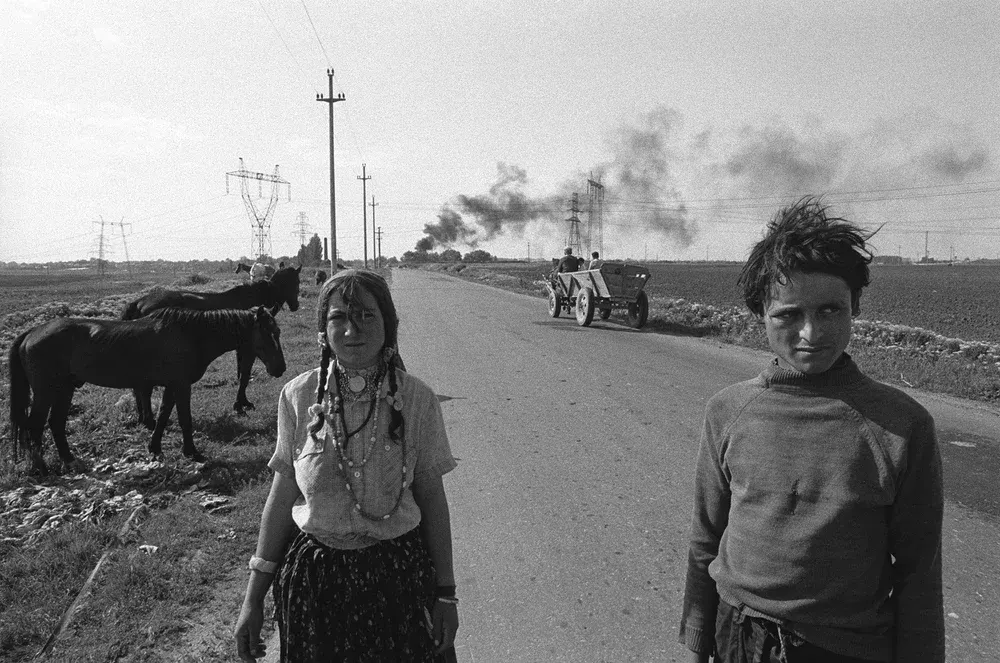
You have some incredible photographs from the nineties in your recent zines. But the ones I’m most drawn to are the photographs of Roma communities in Romania. How did that come about?
I’d gone out to Romania because I wanted to be a photojournalist.
How old were you?
I was 22. I’d been out of college a year and a half, maybe. I went out in the aftermath of the revolution and stayed for four months over two trips.
This is an extract. The full conversation runs to about 2,200 words: read the full interview on The Crop.
Also this autumn
Urban Coincidence
Photography is unusually well suited to being reproduced in poster form. The high street is not a white cube gallery.